







WHAT IS DIGITAL FORENSICS
"*" indicates required fields
WHAT IS DIGITAL FORENSICS
"*" indicates required fields
Next, isolate, secure, and preserve the data. This includes preventing people from possibly tampering with the evidence.
A Digital Forensics Investigator is someone who has a desire to follow the evidence and solve a crime virtually. Imagine a security breach happens at a company, resulting in stolen data. In this situation, a computer forensic analyst would come in and determine how attackers gained access to the network, where they traversed the network, and what they did on the network, whether they took information or planted malware. Under those circumstances, a digital forensic investigator’s role is to recover data like documents, photos, and emails from computer hard drives and other data storage devices, such as zip and flash drives, with deleted, damaged, or otherwise manipulated.
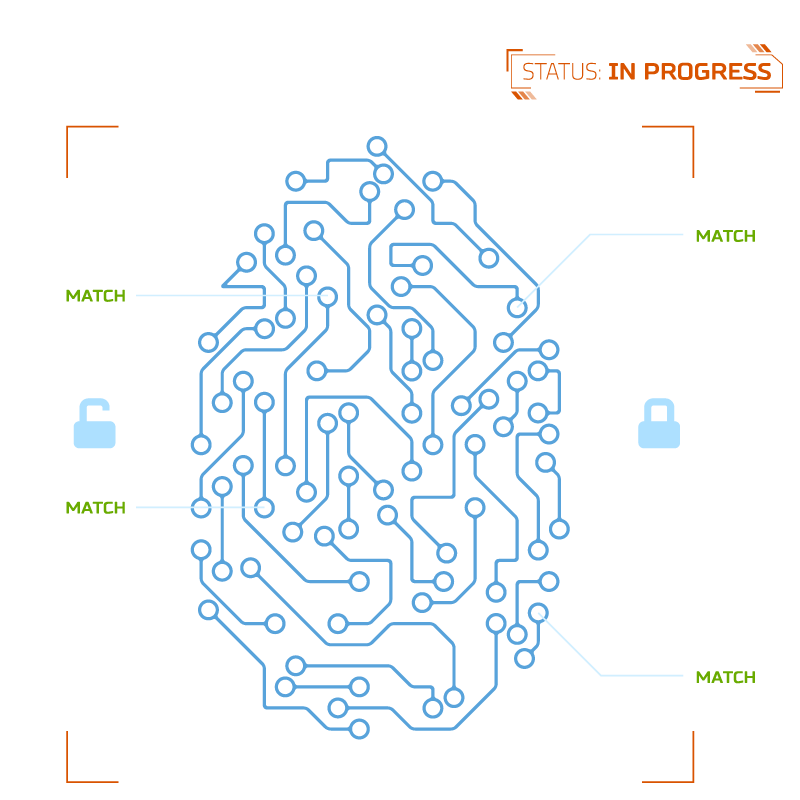
Digital footprint is the information about a person on the system, such as the webpages they have visited, when they were active, and what device they were using. By following the digital footprints, the investigator will retrieve the data critical to solving the crime case. To name a few –Matt Baker, in 2010, Krenar Lusha, in 2009, and more cases were solved with the help of digital forensics.
Cyber forensic investigators are experts in investigating encrypted data using various types of software and tools. There are many upcoming techniques that investigators use depending on the type of cybercrime they are dealing with. Cyber investigators’ tasks include recovering deleted files, cracking passwords, and finding the source of the security breach. Once collected, the evidence is then stored and translated to make it presentable before the court of law or for police to examine further. The role of cyber forensics in criminal offenses can be understood with a case study: cold cases and cyber forensics
Thousands of digital devices that have been seized by police as evidence for alleged crimes, including terrorism and sexual offenses, are sitting in storage in a growing backlog that investigators are struggling to tackle.
In the lack of efficient resources to analyze the evidence, the PA news agency has found that 12,122 devices (includes phones, tablets, and computers) are awaiting examination across 32 forces. Unlikely, the backlog has remained the same previous year resulting in hampering prosecutors in criminal cases. In another case, a Times investigation from the last year confirmed awaiting examination of 12,667 devices from 33 police forces. The long-pending investigations show how overwhelmed a digital forensic team is due to the sheer volume of digital evidence collected.
The process of evidence assessment relates the evidential data to the security incident. There should be a thorough assessment based on the scope of the case.
The Sleuth Kit (earlier known as TSK) is a collection of Unix- and Windows-based utilities that extract data from computer systems. It is an open-source software that analyzes disk images created by “dd” and recovers data from them. With this software, professionals can gather data during incident response or from live systems. Professionals can integrate TSK with more extensive forensics tools.
FTK Imager is an acquisition and imaging tool responsible for data preview that allows the user to assess the device in question quickly. The tool can also create forensic images (copies) of the device without damaging the original evidence.

Xplico is a network forensic analysis tool (NFAT) that helps reconstruct the data acquired using other packet sniffing tools like Wireshark. It is free and open-source software that uses Port Independent Protocol Identification (PIPI) to recognize network protocols. The tool is built on four key components: Decoder Manager, IP Decoder, Data Manipulators, and Visualization System.

If you have good analytical skills, you can forge a successful career as a forensic
computer analyst, tracing the steps of cybercrime
The role of a forensic computer analyst is to investigate criminal incidents and data breaches. These forensic analysts often work for the police, law enforcement agencies, government, private, or other forensic companies. They use specialized tools and techniques to retrieve, analyze, and store data linked to criminal activity like a breach, fraud, network intrusions, illegal usage, unauthorized access, or terrorist communication.
Employers look for certified forensic investigators with key digital forensic skills, including: are as follows:
As per Payscale, the average salary of a Digital Forensic Computer Analyst is $72,929
Forensic experts must have report writing skills and critical thinking.
The most notable challenge digital forensic investigators face today is the cloud environment. While cloud computing is incredibly beneficial to an organization, they are also challenging for forensics investigators. The basic principle that the cloud is somebody else’s computer holds some truth, but huge server farms host most data. Since the cloud is scalable, information can be hosted in different locations, even in different countries. This makes it extremely difficult to gather accurate and trusted evidence in a case because establishing a proper chain of custody becomes nearly impossible. In addition, the jurisdiction of the data must be considered since different laws apply to depend on where it is located.
The rising significance of digital forensics is creating an increased demand for computer forensic talent. As the role requires a specific set of skills that can be acquired via formal education and practice, EC-Council has the Computer Hacking and Forensic Investigator (CHFI) program to offer to those aspiring to become cyber professionals. The CHFI certification will fortify the application knowledge of law enforcement personnel, security officers, network administrators, legal professionals, and anyone concerned about the integrity of the network infrastructure. EC-Council’s CHFI is a vendor-neutral comprehensive program that encapsulates the professional with required digital forensics knowledge.
CHFI presents a methodological approach to computer forensics, including searching and seizing digital evidence and acquisition, storage, analysis, and reporting of that evidence to serve as a valid piece of information during the investigation. A CHFI can use different methods to discover data from a computer system, cloud service, mobile phone, or other digital devices.
It is a comprehensive program that comprises 14 modules and 39 lab sessions. The program can be taken completely online with a duration of 40 hours, during which you will be trained on the computer forensics and investigation process. CHFI also helps you understand the law enforcement process and rules that guide you through the legal process of investigation.
CHFI includes major real-time forensic investigation cases that were solved through computer forensics. The study enables students to acquire hands-on experience in different forensic investigation techniques that were adopted from real-life scenarios.
The required skills for being a digital forensic investigator include knowledge of information technology and cybersecurity, but EC-Council does not restrict candidates with pre-requisites, specific qualifications, or experience to join the program.
EC-Council is one of the few organizations that specialize in information security (IS) to achieve ANSI 17024 accreditation. American National Standards Institute (ANSI) is a private non-profit organization that ensures the integrity of the standards as defined by them.
CHFI is 100% mapped to the “Protect and Defend” Workforce Framework of NICE (National Institute of Cybersecurity Education), which categorizes and describes cybersecurity job roles.
The current CHFI program is version 9, and that means it is continually updated to adhere to evolving forensic tools and methodologies. CHFI is updated with case studies, labs, digital forensic tools, and devices.
The program has detailed labs making up almost 40% of the total training time. CHFI also comes with cloud-based virtual labs that allow the candidate to practice investigation techniques that mirror real-life situations in a simulated environment.
For additional reading, the program comes loaded with many white papers. The student kit also contains various forensic investigation templates for evidence collection, chain-of-custody, investigation reports, and more.
CHFI has a module dedicated to writing a report and presentation that enhances your skills in presenting the authenticity of the evidence collected and analyzed, explaining its significance in solving the case.
"*" indicates required fields