








"*" indicates required fields

"*" indicates required fields

01
02
03
04
05
06
07
The business continuity plan is a blueprint to be referred during the crisis with defined strategies to deal with the effects. These key elements play a vital role in creating an effective business continuity plan.
How to Create an Effective Disaster Recovery Plan in 5 Steps?
Identifying Business Continuity Risks
Understanding IT infrastructure is required to identify business continuity risks. The key points to incorporate when determining their scope are –

Virtualization provides flexibility in disaster recovery. Here servers are virtualized independent from the underlying hardware. Therefore, an organization does not need the same physical servers at the primary site as at its secondary disaster recovery site.


The key difference between DR and BC
The key difference can be identified when the plan is in the implementation stage. Business continuity enables operations to function during the event and aftermath. Whereas, disaster recovery defines how to respond to the event and to return to the normal business phase. While both functionally incorporate a measured response, disaster recovery aims to re-establish the business operations. Though a few areas overlap, they remain distinct in their operation.
Make sure your disaster recovery plan works when you need it!
An AI-enhanced plan can help strategists draft a better plan for disaster recovery. It uses techniques like ‘business impact analysis’ and ‘risk assessment.’
AI can be used to automate and control various parts of disaster recovery and business continuity plans. It does not only help prevent issues from arising, but also adapts to new data to make it predictive analysis effective.
AI can quickly analyze the reason behind the attack and can be programmed to initiate an auto-recovery action.
The more AI is exposed to data to handle downtime and outages, the better they will learn to register the issues of downtime.
AI can quickly analyze the reason behind the attack and can be programmed to initiate an auto-recovery action.
Effect on business continuity leading to a major loss.
Extreme financial and reputational loss.
The cost of a data breach creates an additional burden.

Tip 2
Involve the team in the attack mitigation plan.
Tip 3
Document, implement, and regularly update the recovery plan.
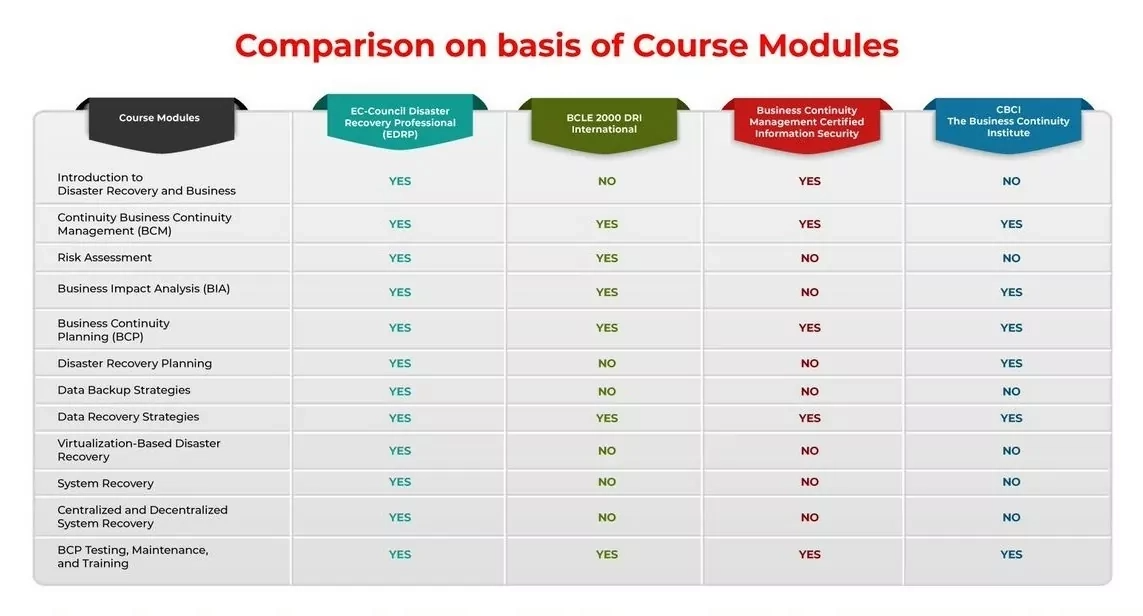
Here are some of the more popular Business continuity and Disaster Recovery certifications that are recognized by the industry:
CBCI by The Business Continuity Institute (BCI)
Business Continuity Management by Certified Information Security
BCLE 2000, BCP 501 & BCP 601 by DRI International, Inc.
"*" indicates required fields